
An October night in the Central Fells.
For an early October camp, yesterday, we headed for Steel Fell, rising to 553 metres above Dunmail Raise at the head of the Vale of Grasmere in the Central Fells. The plan was simple: a short, steep climb from Dunmail Raise, find a sheltered pitch on the higher ground, cook some food, spend the night overlooking the valley and put another night in the field with a Fellman sleeping bag.
THE APPROACH
Starting from Dunmail Raise, the route onto Steel Fell wastes very little time gaining height.
The ascent is short, but steep from the outset, climbing directly away from the road with very little in the way of a gentle introduction. It's the kind of approach where elevation comes quickly — and with it, increasingly impressive views.
As we climbed higher, the van became smaller and smaller on the A591 far below, while the landscape around us continued to open up. Across the valley, waterfalls cut down the opposing fells, and with every bit of height gained, more of the Helvellyn range came into view.
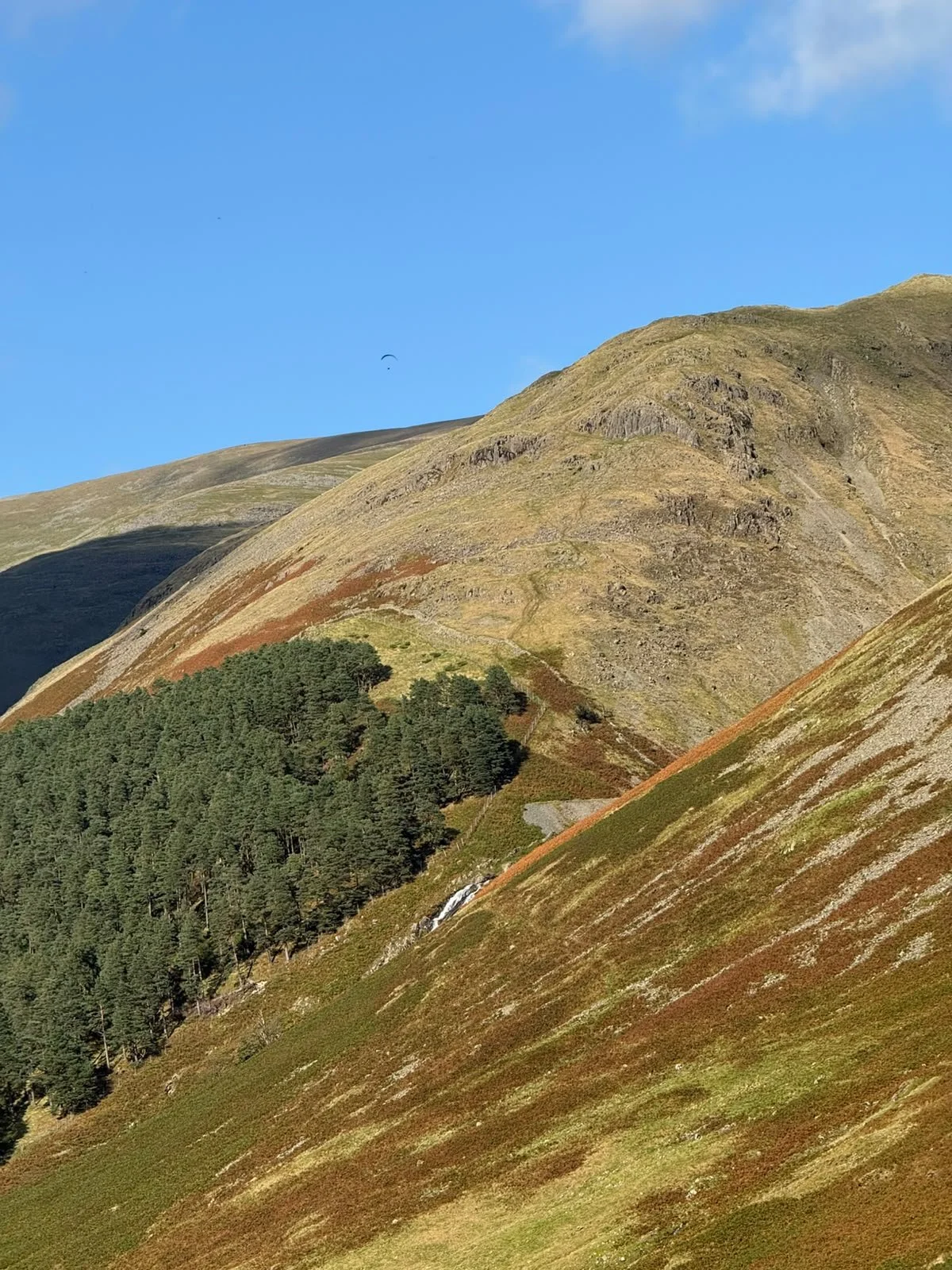
Looking across towards Seat Sandal from the steep ascent of Steel Fell, with waterfalls cutting through the opposing slopes. Paraglider above.
Looking back towards the south, the head of the Vale of Grasmere increasingly opened beneath us, giving an early indication of the views waiting higher on Steel Fell.
Underfoot, autumn conditions were already making themselves known. The steep grassy ascent was wet and soft in places, and as we reached the higher ground, boggier sections became increasingly common.
The climb itself may be relatively short, but there is nothing particularly gentle about it. By the time the gradient finally begins to ease, you've gained enough height for the landscape around Steel Fell to feel considerably bigger than it did from Dunmail Raise below.
And with a two-person freestanding shelter in the pack, our attention was already beginning to shift from the climb to the next challenge: finding enough flat, reasonably dry ground to pitch it.
THE SUMMIT
Reaching the summit opened up views in almost every direction.
Thirlmere sat below with the Northern Fells rising beyond, while looking south opened up the landscape towards Grasmere and Windermere.
Closer by, the distinctive profile of Helm Crag stood prominently above the valley.
Visibility was good and the skies remained clear, giving us time to take in the surrounding fells before turning our attention to the next job: finding somewhere to sleep.
The summit itself wasn't somewhere we particularly wanted to stay. It was exposed, and suitable flat ground for our shelters was limited.
So rather than forcing a pitch, we continued west across Steel Fell in search of something better.
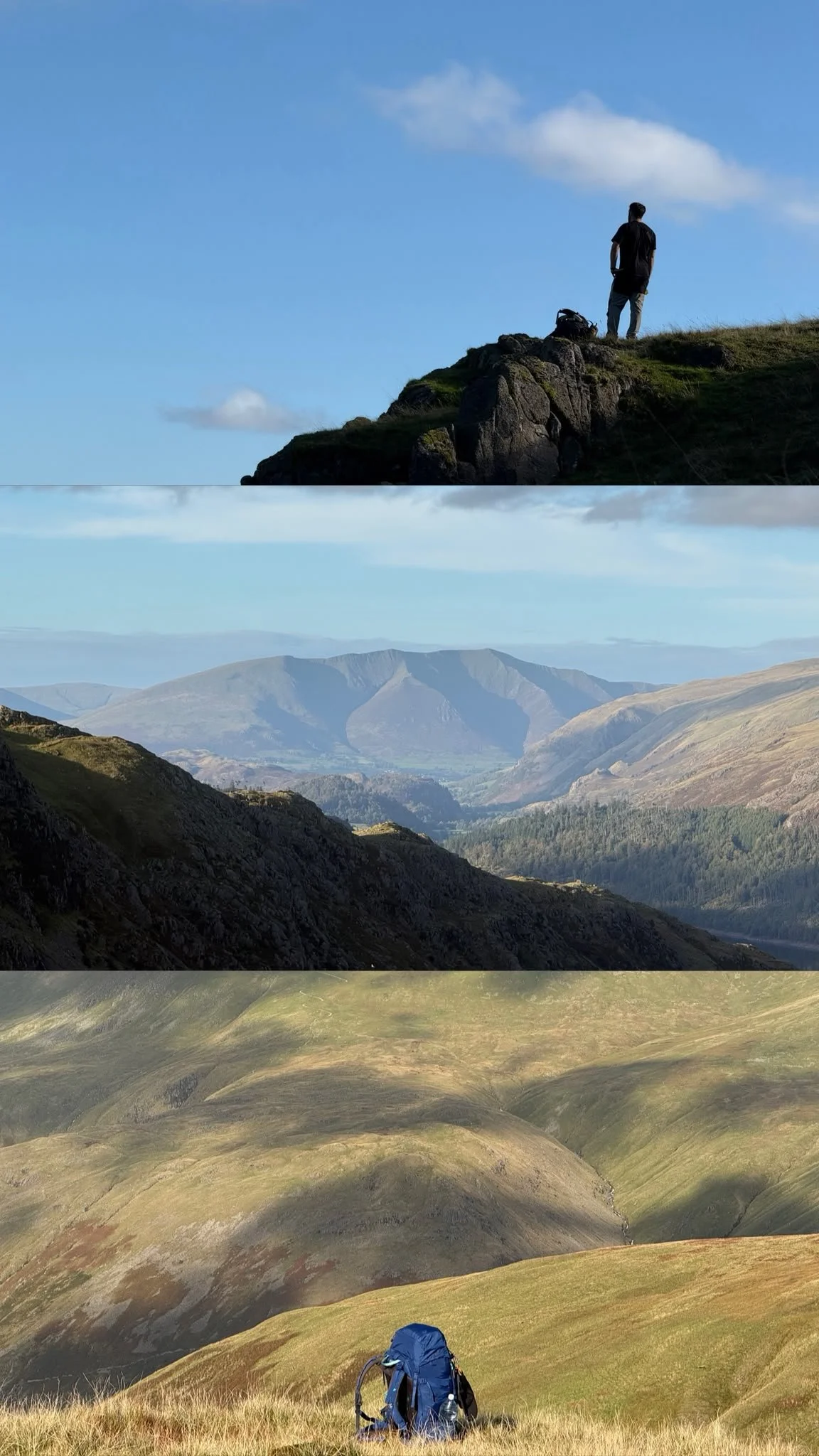
Levelling out on the upper slopes of Steel Fell.
FINDING THE PITCH
This took longer than expected.
Steel Fell has plenty of open ground, but once you start looking for somewhere to actually pitch, things change. Much of the higher ground we crossed was uneven, wet or boggy, with surprisingly few genuinely flat areas. It would be considerably better in summer months.
We were carrying two separate shelters — a two-person freestanding tent and a smaller one-person tent — so finding enough suitable ground for both made the search that little bit harder.
Rather than settling for the first workable option, we continued west across the fell looking for somewhere flatter and naturally sheltered.
Eventually, we found it.
Between two natural rock formations was a small, flat grass balcony, tucked into the fell with rock providing some natural protection on either side. There was enough usable ground for both shelters, while in front of us the fell dropped away towards the valley, opening up a view in the direction of Helm Crag.
It was the kind of pitch that would be easy to walk straight past - a small pocket of level ground hidden among otherwise wet and uneven terrain.
Flat grass, natural shelter and an open view down the valley.
That was camp for the night.
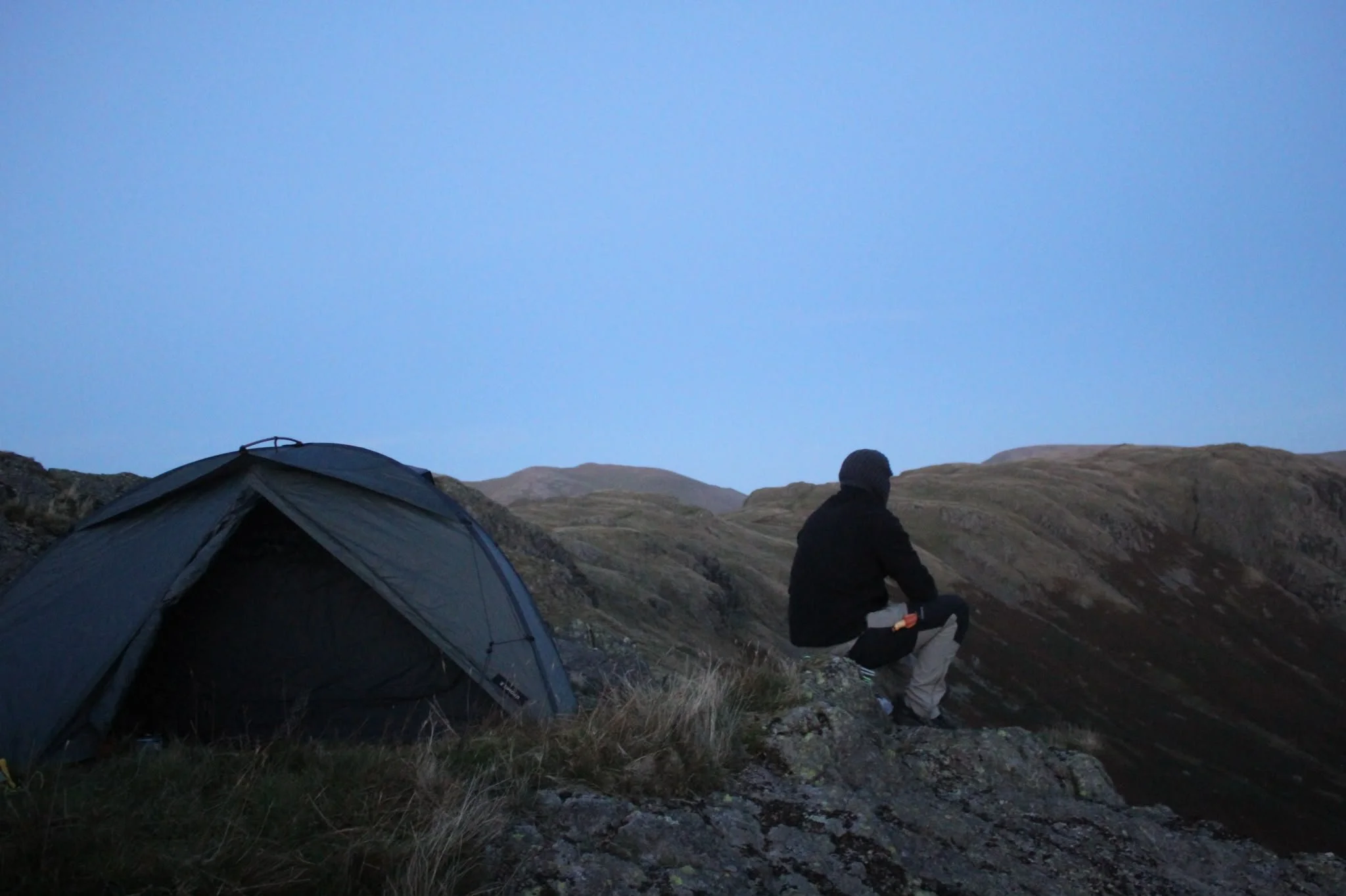
Looking out across the valley from our pitch.
SETTING UP CAMP
The two-person freestanding shelter gave considerably more internal space than a minimalist solo setup, which was welcome as daylight disappeared and temperatures began to fall.
Once the shelter was secure, we unpacked properly, organised the equipment we'd need through the evening and allowed our sleeping bags to loft after being compressed in our packs.
With camp established, there was nothing complicated left to do.
Food, a brew and time outside.
The clear conditions we'd experienced on the summit continued into the evening, and as the last of the daylight disappeared, the sky above Steel Fell remained largely clear.
By full darkness, we were sitting beneath the stars.
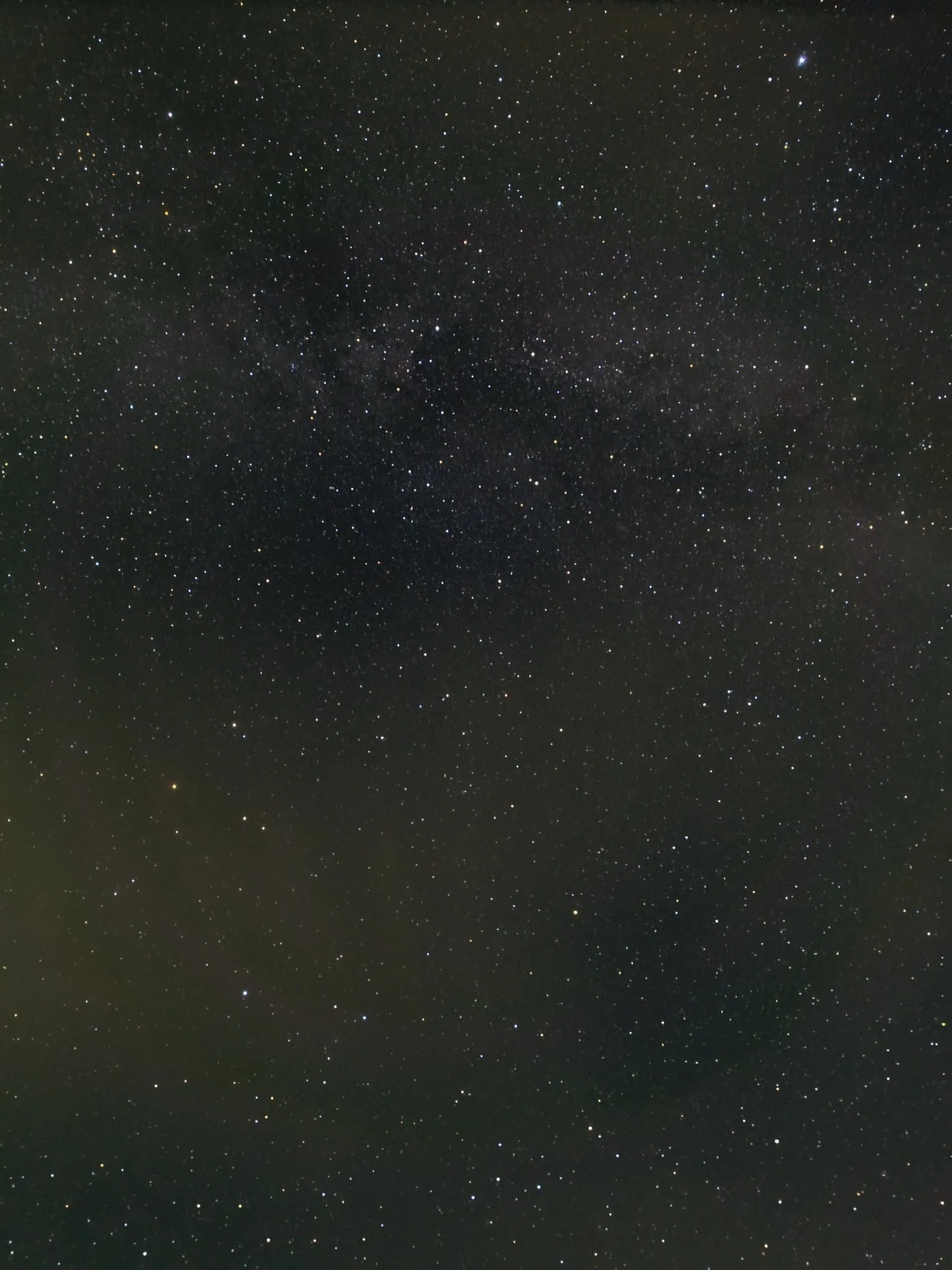
Sky full of stars above the Central Fells.
SLEEPING IN THE NIGHTHAWK 1200
For this trip, we used the FELLMAN NIGHTHAWK 1200 down sleeping bag.
Filled with 1,200g of duck down, the NIGHTHAWK is our warmer sleeping system and provided considerably more insulation than was ultimately required for the conditions on Steel Fell.
But field testing isn't only about pushing equipment to its limits.
Repeated nights outside allow us to see how equipment performs during normal use too: how quickly insulation recovers its loft after being compressed in a pack, how easily temperature can be regulated during the night and how the materials deal with the moisture and condensation that are simply part of sleeping outside.
Once camp was established, the NIGHTHAWK was removed from its storage system and given time to fully loft.
As temperatures dropped later in the evening, the hood and insulated neck baffle allowed warmth to be retained around the upper body while limiting cold air entering the bag.
For the conditions we experienced on Steel Fell, there was plenty of warmth in reserve.
It made for an ultra comfortable night.
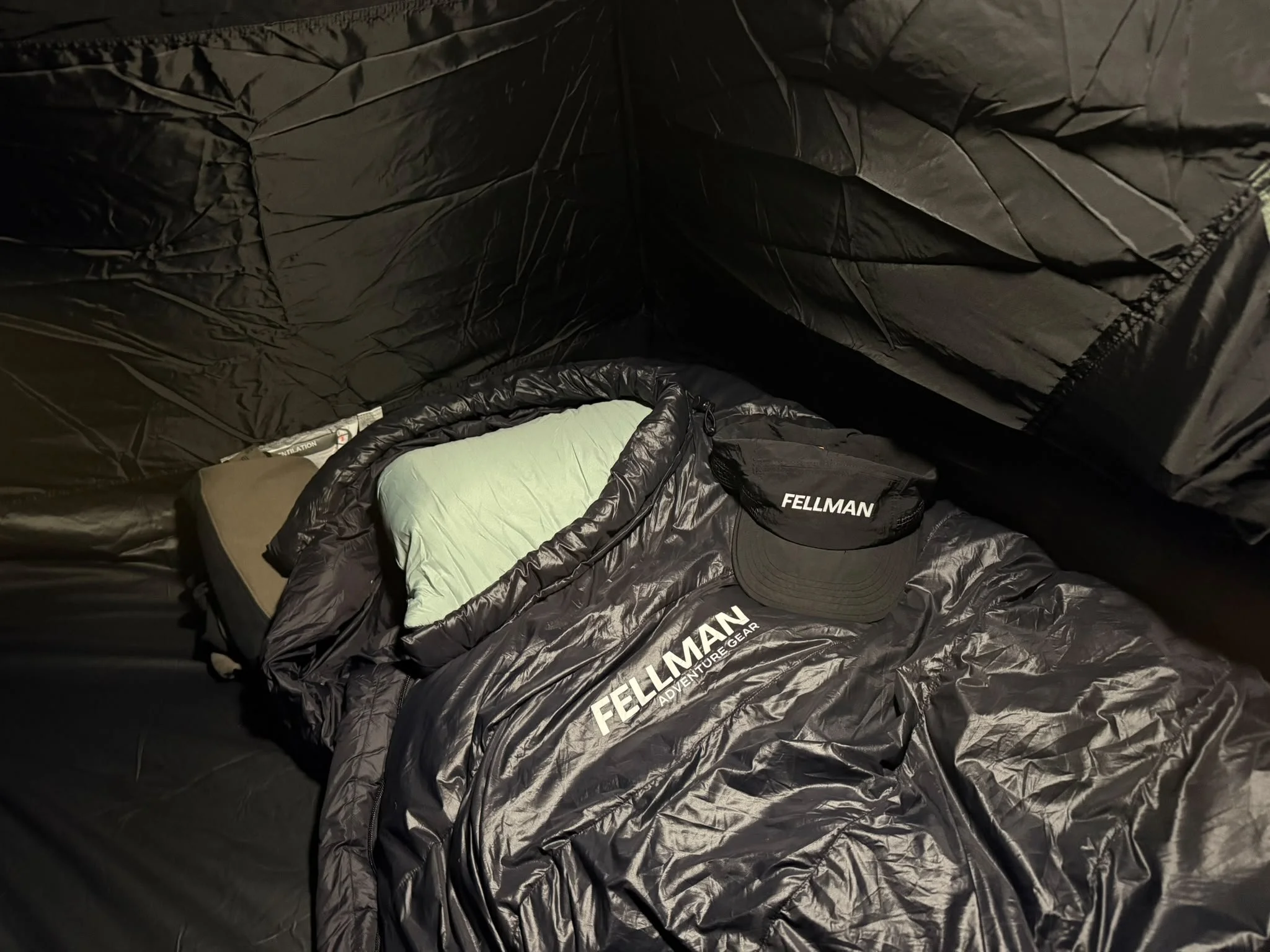
Fellman Nighthawk 1200 & Classic Quick Dry Cap inside shelter.
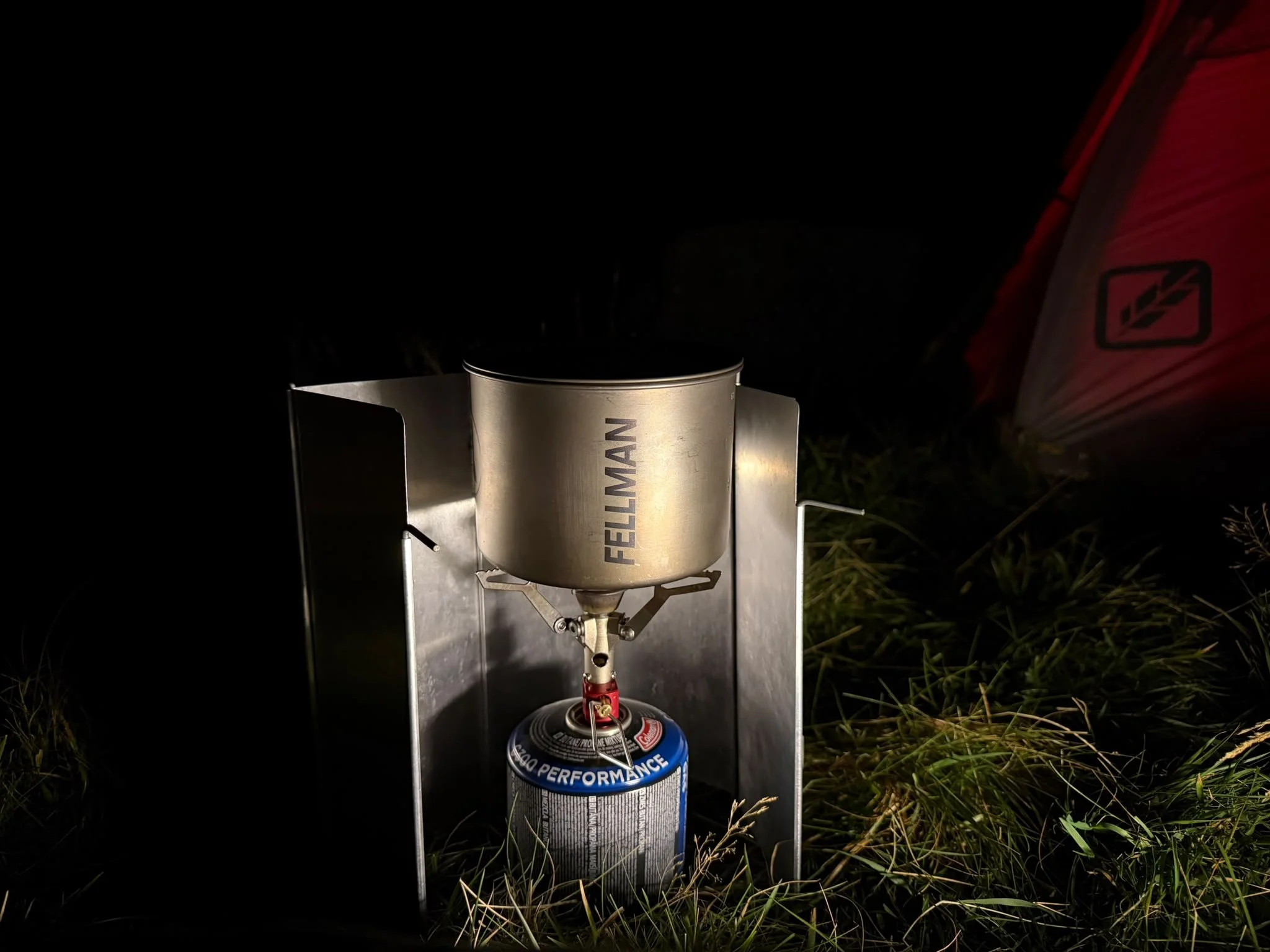
Preparing hot water in the Fellpot 900 at camp.
A DIFFERENT FELL BY MORNING
Opening the shelter the following morning revealed a completely different Steel Fell.
The clear skies and stars from the night before had disappeared.
Fog, mist and low cloud had moved across the fell, leaving the surrounding landscape clagged in and dramatically reducing visibility.
The distant views towards the surrounding fells were gone.
The wind had also begun to increase, changing the feel of the camp considerably from the relatively settled conditions we'd experienced the evening before.
It was a good demonstration of how quickly conditions can change in the Lake District - particularly during autumn.
There wasn't much reason to hang around.
We packed down the shelter, checked the pitch carefully for anything that might have been left behind and returned the small grass balcony to how we'd found it.
Then it was time to head down.
BACK TO DUNMAIL RAISE
From the higher ground, we began the steep descent back towards Dunmail Raise.
With visibility reduced and the ground wet underfoot, the descent required more attention than the climb had the previous evening.
Eventually the road came back into view through the mist and the short overnight trip was over.
Nothing particularly extreme.
No huge mileage or expedition objective.
Just a steep climb onto a Lake District fell, a carefully chosen patch of grass between two rocks, good food, a warm sleeping bag and a night beneath a clear October sky.
FIELD DATA
Location: Steel Fell, Central Fells, Lake District
Summit elevation: 553m
Date: 3–4 October 2026
Shelter: 2-person freestanding tent
Sleep system: FELLMAN NIGHTHAWK 1200
Ground conditions: Damp, soft and boggy in places; limited genuinely flat pitching ground
Evening: Dry with good visibility and clear skies
Overnight: Cool, dry and predominantly clear with stars overhead
Morning: Fog, mist and low cloud; clagged in with reduced visibility and increasing wind
Route out: Steep descent towards Dunmail Raise
FELLMAN ADVENTURE GEAR
Life, best enjoyed outside.
Leave No Trace.
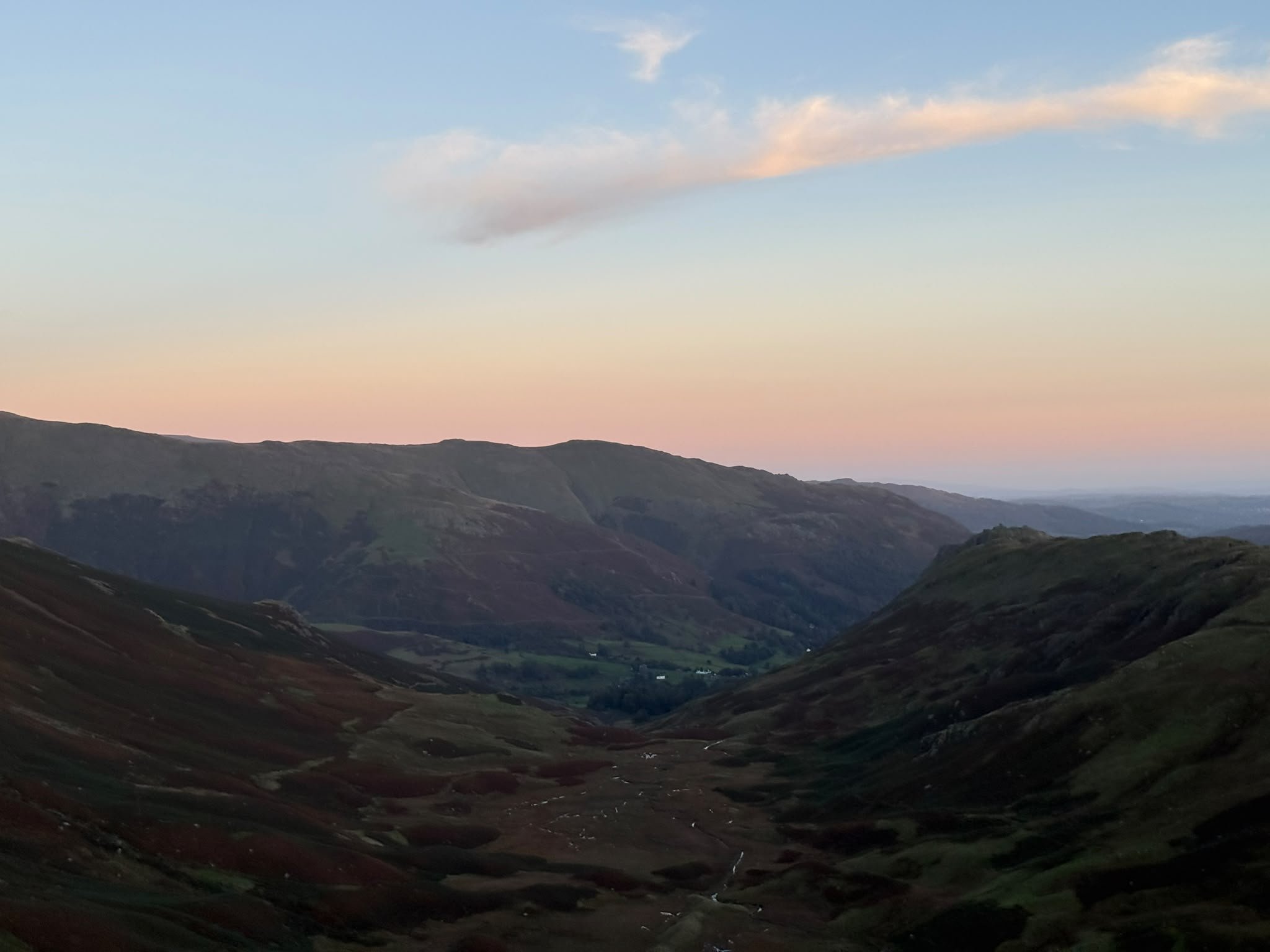
Looking down into the valley towards Grasmere with Helm Crag visible on the right.
